
 English
 Español
 Português
 Deutsch
 Français
 Italiano
 Русский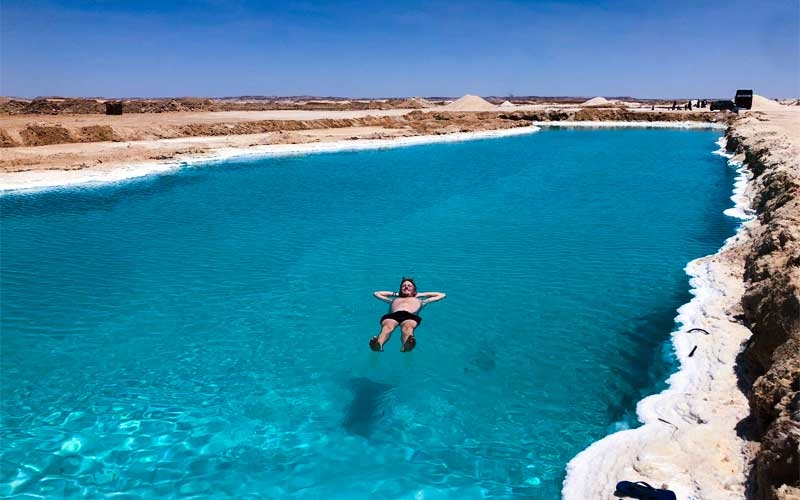
Egypt's lakes are among the country's most underrated treasures, from Lake Nasser's vast reservoir to Siwa's salt lakes. This guide covers the major lakes in Egypt, their history, and how to experience them.
The First Light on the Water: Why the Lakes in Egypt Matter
Most travelers come to Egypt for the pyramids. They leave remembering the water. A felucca drifting across the Nile at sunset. The impossible blue of a salt lake in Siwa. The reflection of a desert mountain in a lake that should not exist. The lakes in Egypt are not a footnote to the country's ancient monuments. They are a parallel story—one of geology, adaptation, and survival in one of the driest places on Earth.
Egypt's lakes range from vast man-made reservoirs to ancient natural basins that have supported human settlement for millennia. Some are hypersaline lagoons where you float without effort. Others are freshwater wetlands that host hundreds of thousands of migratory birds. A few are accidents of engineering that became ecological treasures. Together, they form a network of water bodies that sustain wildlife, support fishing communities, and offer travelers a side of Egypt that few expect.
This guide covers 13 major lakes in Egypt, organized roughly from the desert oases to the Nile Valley and the northern coast. Each one has its own character, its own history, and its own reason to be visited. Whether you are drawn to the ancient shores of Lake Qarun or the therapeutic waters of Siwa, these major lakes in Egypt represent the country's most remarkable inland waters.
1. Magic Lake: A Hidden Gem Among the Lakes in Egypt
Magic Lake sits in the Fayoum Oasis, tucked near Wadi El-Hitan and surrounded by rocky mountains and sand dunes. It earns its name from the way its water changes color throughout the day—shifting from turquoise to deep blue to a mirror-like silver depending on the angle of the sun. The lake is fed by mineral-rich springs, and locals believe the water has therapeutic properties, particularly for rheumatism, which they treat through a practice called sun bathing.
The lake is a popular spot for camping, and the surrounding dunes are ideal for sandboarding and Horse Ride excursions. The Al Fayoum Oasis region, of which Magic Lake is a part, offers a mix of desert, water, and rural life that is unlike any other part of Egypt. For travelers looking for a quiet escape from Cairo, Magic Lake is about two hours away and delivers a completely different pace—one of the most accessible lakes in Egypt for a day trip.
2. Lake Nasser: The Largest of All Lakes in Egypt
Lake Nasser is the largest man-made lake in Egypt and one of the largest reservoirs in the world. It was created by the construction of the High Dam at Aswan between 1958 and 1970, and it is named after President Gamal Abdel Nasser, who initiated the project. The lake stretches approximately 500 kilometers in length and covers a surface area of about 5,250 square kilometers. Its waters extend into Sudan, where the reservoir is known as Lake Nubia. According to scientific records, the lake has a storage capacity sufficient to irrigate farms in Egypt and Sudan year-round, allowing up to three harvests per year, and it provides hydroelectric power, improved navigation, and expanded fisheries.
The lake's most famous feature is not the water itself but what sits beside it: the Abu Simbel Temple, relocated to higher ground to save it from the rising waters. A Lake Nasser Cruise is one of the most peaceful ways to experience southern Egypt, offering access to temples that few travelers ever see. As the largest of all lakes in Egypt, Lake Nasser is a destination in its own right.
Cruising Lake Nasser: The Best Way to Experience Egypt's Largest Lake
A Lake Nasser cruise typically runs between Aswan and Abu Simbel, with stops at sites like Kalabsha Temple, Wadi El Seboua (Valley of the Lions), and the Temple of Amada. The experience is quieter than a Nile cruise between Luxor and Aswan, with fewer boats and a greater sense of isolation. For travelers who have already seen the classic Nile route, Lake Nasser offers a different perspective on Nubian history and desert landscapes—and it remains the most impressive of the lakes in Egypt for sheer scale.
3. Lake Qarun: The Ancient Lake That Shaped Egypt's History
Lake Qarun, also known as Lake Moeris, is one of the oldest lakes in Egypt, with Neolithic settlements along its ancient shoreline. It sits in the Fayoum Depression, about 90 kilometers southwest of Cairo, and covers approximately 240 square kilometers. The lake was originally a freshwater body fed by Nile overflow, but it has become increasingly saline over the centuries due to evaporation and the inflow of agricultural drainage water. The name "Moeris" is a Greek translation of the ancient Egyptian "mr-wr," meaning "Great Canal," and it is also associated with Pharaoh Amenemhat III of the 12th Dynasty.
The lake is a protected area and a Ramsar site, recognized for its importance as a nesting ground for birds. More than 88 bird species have been recorded there, and the waterbird population was estimated at over 26,000 individuals in 2010. The lake also supports threatened species like the slender-horned gazelle and Dorcas gazelle. The surrounding area contains fossil beds, including the prehistoric mammal Moeritherium, and archaeological remains that link the lake to the construction of the Giza Necropolis via the world's oldest known paved road. For travelers interested in the deep history of the lakes in Egypt, Lake Qarun is essential.
4. Lake Timsah: A Vital Lake in Egypt's Suez Canal
Lake Timsah, whose name means "Crocodile" in Arabic, is located in Ismailia governorate on the Nile Delta. It occupies a depression that extends from the Mediterranean Sea to the Gulf of Suez and covers about 5.4 square miles of shallow, marshy land. The lake has a history dating back 4,000 years to the Middle Kingdom, when a canal was built to connect it to the Nile. Today, it is an integral part of the Suez Canal, serving as a passing lane for ships transiting between the Red Sea and the Mediterranean. The salinity of the lake has increased over time due to Red Sea water and human intervention, including the construction of the High Dam. Beaches along the lake include Melaha, Fayrouz, and Bahary, and the city of Ismailia offers a pleasant base for exploring this lesser-known lake in Egypt.
5. The Salt Lakes of Siwa: The Most Unique Lakes in Egypt
The salt lakes of Siwa are among the most surreal bodies of water in Egypt. Located in the Siwa Oasis in the Western Desert, about 800 kilometers from Cairo, these lakes have a salt concentration so high that swimmers float effortlessly on the surface. The oasis contains four main salt lakes: Zeitoun Lake in the east, Aghormy Lake in the northeast, Siwa Lake, and Maraqi Lake in the west. The waters are believed to have therapeutic properties for skin, eye, and sinus conditions, and the surrounding landscape is a mix of salt flats, palm groves, and desert dunes.
Visitors can enjoy Quad Bike excursions, Camel Ride treks, and camping under some of the darkest skies in Egypt. The nearby White Desert and Black Desert are also accessible from Siwa, making it a natural base for exploring the Western Desert. The Bahariya Oasis and Dakhla Oasis are further south, but Siwa remains the most famous and most visited of Egypt's desert oases—and its salt lakes are arguably the most unusual lakes in Egypt.
Fatnas Lake: The Most Peaceful of Siwa's Lakes in Egypt
Fatnas Lake, a small island-peninsula within the Siwa Oasis, is the most famous of the salt lakes. It sits on a saltwater lake whose surface mirrors the desert sky so perfectly that the stars appear both above and below you. Visitors drink mint tea in palm-frond huts and watch the Milky Way bleed into the saltwater reflection. The effect is surreal, and it makes Fatnas one of the most photogenic spots in Egypt. For travelers who want to experience the lakes in Egypt at their most peaceful, Fatnas is the answer.
6. Wadi El-Rayan Lakes: The Only Waterfalls Among Lakes in Egypt
The Wadi El-Rayan lakes are a pair of artificial lakes in the Fayoum governorate, created in the 1970s when excess agricultural drainage water was diverted into the Wadi El-Rayan depression. The lakes sit at different elevations and are connected by a swampy channel. The upper lake covers about 50.9 square kilometers, and the lower lake covers about 62 square kilometers. Between them, a series of waterfalls—the only permanent waterfalls in Egypt—cascade from the upper lake to the lower one. The lakes are part of the Wadi El-Rayan Protected Area and were declared a World Heritage Site in 2005.
The area is a hotspot for biodiversity, hosting 38 wild plant species, 34 fish species, 163 bird species, 28 mammal species, and 19 reptile species. The surrounding dunes are ideal for sandboarding, and the nearby Wadi El-Hitan offers a chance to see 40-million-year-old whale fossils. For travelers looking for a day trip from Cairo that combines water, desert, and fossils, Wadi El-Rayan is one of the best options among the lakes in Egypt.
Sandboarding and Fossils: Adventure at the Wadi El-Rayan Lakes in Egypt
The dunes around Wadi El-Rayan are among the best sandboarding spots in Egypt. After a morning of sandboarding, visitors can explore the fossil beds at Wadi El-Hitan, a UNESCO World Heritage Site that documents the evolution of whales from land mammals to sea creatures. The combination of adventure and science makes Wadi El-Rayan one of the most compelling lakes in Egypt for families and curious travelers.
7. Lake Burullus: The Second-Largest Natural Lake in Egypt
Lake Burullus is the second-largest natural lake in Egypt, located in Kafr El-Sheikh governorate on the northern Nile Delta. It stretches about 56 kilometers from east to west, with a width ranging from 6 to 16 kilometers, and it serves as a bridge between the two Nile branches, Rashid and Damietta. The lake is connected to the Mediterranean Sea through a narrow channel called Bogaz Burullus. It was declared a natural protectorate in 1998 and is a Ramsar site, recognized for its importance as a wintering and breeding habitat for birds.
The lake suffers from significant environmental pressure, including agricultural drainage and untreated wastewater, which have degraded water quality over time. Despite these challenges, it remains an important fishery, producing about 55,000 tons of fish per year. For travelers interested in Egypt's wetland ecosystems and birdwatching, Lake Burullus offers a different kind of experience from the desert lakes in Egypt.
8. Lake Mariout: The Forgotten Lake in Egypt's Alexandria
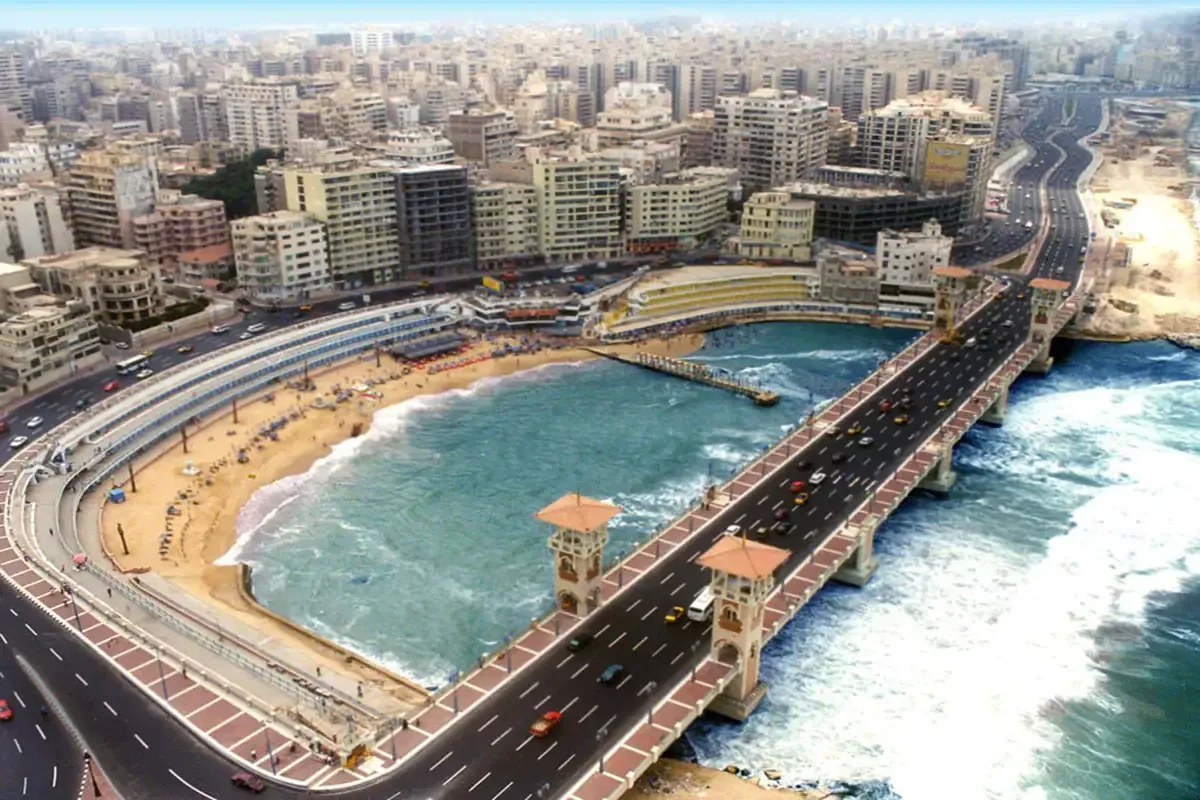
Lake Mariout is the smallest of Egypt's northern lakes, located near Alexandria and separated from the Mediterranean Sea. It covers about 50 square kilometers today, down from its historical extent of around 200 square kilometers. The lake was historically connected to the Nile through canals and served as a source of irrigation and drinking water. Over the centuries, it has shrunk significantly, and in 1801, British forces destroyed 150 villages and allowed seawater to rush in, making the lake too shallow for navigation.
The lake is a brackish body of water, separated from the sea but still influenced by it. The shoreline is home to saltworks and fisheries, and the nearby town of Abusir contains ruins of an ancient lighthouse and temple. Many believe the surroundings were the burial ground of Mark Antony and Cleopatra. For travelers exploring Alexandria Tours, Lake Mariout offers a quiet counterpoint to the city's Mediterranean bustle—and a reminder that the lakes in Egypt are not limited to the desert.
9. The Great Bitter Lake: A Strategic Lake in Egypt's Suez Canal
The Great Bitter Lake and the Small Bitter Lake are part of the Suez Canal near Ismailia. They were originally dry salt valleys, but they are now connected to both the Red Sea and the Mediterranean and serve as a passing lane for ships transiting the canal. The lake's history dates back to the Old Kingdom of Egypt (2700–2200 BC), when it was mentioned in the ancient pyramid texts. Its current name comes from the Greek, reflecting its high salinity—41‰ in some measurements. The lake is 24 kilometers long, 13 kilometers wide, and covers about 194 square kilometers. It hosts 31 gastropod species and 19 bivalve species, making it a site of significant biodiversity. For travelers interested in the intersection of engineering and nature, the Bitter Lakes are a fascinating stop among the lakes in Egypt.
10. Bardawil Lake: The Hypersaline Lake in Egypt's Sinai
Bardawil Lake is a hypersaline lagoon on the northern coast of the Sinai Peninsula, near the Zaranik protected area. It is about 30 kilometers long and 14 kilometers wide, with a surface area of 59,500 hectares. The lake is shallow, with a maximum depth of about three meters, and is separated from the Mediterranean Sea by a narrow sandbar. It is a Ramsar site and an important spawning area for fish, supporting commercially important fish populations and serving as a wintering and staging area for about 500,000 birds.
The lake's ecosystem includes interdune depressions, wet salt marshes, sand dunes, and saline sand flats. It is home to threatened plant species like Iris mariae and provides habitat for sea turtles and bottlenose dolphins. The lake is named after Baldwin I, a Crusader king who raided Egypt and died in El-Arish in 1118 CE. For travelers exploring the Sinai, Bardawil Lake offers a remote and ecologically significant destination among the lakes in Egypt.
11. Toshka Lakes: The Accidental Lakes in Egypt's New Valley
The Toshka Lakes were created by periodic overflow from Lake Nasser during high Nile floods, beginning around 1988. They were first observed forming by astronauts aboard the International Space Station. The lakes are part of the Toshka New Valley project, an ambitious plan to create a new valley in Egypt's Western Desert. At their peak, the lakes covered about 1,450 square kilometers, though their extent has fluctuated over the years due to natural and man-made changes. The lakes have no outlet to the sea and are highly saline.
The Toshka Lakes are a testament to the power of the Nile and the scale of Egyptian engineering. They are not a traditional tourist destination, but they are of interest to travelers who follow environmental and developmental issues. The nearby Abu Simbel Temple and the Lake Nasser Cruise routes make this region accessible. As the newest of the lakes in Egypt, Toshka represents a fascinating case study in how water shapes the desert.
12. Lake Manzala: The Largest Deltaic Lake in Egypt
Lake Manzala is the largest of Egypt's northern deltaic lakes, located in the northeastern Nile Delta near Port Said and the Suez Canal. It is a brackish lake, sometimes called a lagoon, and covers approximately 572 square kilometers. The lake is connected to the Mediterranean Sea through three outlets and to the Nile through two channels, allowing both marine and Nile fish to thrive there. It is one of the most important fish resources in Egypt, with an average productivity of about 60,000 tons annually.
The lake is surrounded by more than a thousand islands, many of which serve as shelters for migratory birds. It supports the livelihoods of about 2 million people in the surrounding governorates. However, the lake faces significant environmental challenges, including nutrient loading from agricultural drainage and heavy metal pollution. Despite these pressures, Lake Manzala remains a vital ecosystem and a compelling destination for travelers interested in Egypt's natural heritage—and it remains the largest deltaic lake in Egypt.
13. Edku Lake: Where Freshwater Meets the Sea in Egypt's Delta
Edku Lake, also spelled Idku, is a freshwater lake on Egypt's northern coast, west of the Rashid branch of the Nile. It covers about 62.78 square kilometers and is connected to the Mediterranean Sea. The lake's ecosystem is unique because it is a meeting point between freshwater and saline seawater, which makes it rich in resources. The surrounding area is characterized by fine sand dunes and a diverse range of plants and wildlife.
The lake is smaller and less visited than Burullus or Manzala, but it offers a quieter experience for travelers interested in Egypt's coastal wetlands. The nearby city of Alexandria provides a base for exploring Edku Lake and the surrounding delta region. Among the lakes in Egypt, Edku is one of the most ecologically distinctive.
Best Time to Visit the Lakes in Egypt
The best time to visit most of Egypt's lakes is October through April, when temperatures are mild and the skies are clear. For desert lakes like Siwa's salt lakes and Wadi El-Rayan, winter offers the most comfortable conditions for camping and outdoor activities. For the northern coastal lakes like Burullus, Manzala, and Edku, birdwatching is best during the winter migration season, when hundreds of thousands of birds pass through the region. Lake Nasser and the Toshka Lakes are accessible year-round, though summer heat can be intense. Regardless of which lakes in Egypt you plan to visit, early morning and late afternoon are the most comfortable times for exploration.
Summary: The Major Lakes in Egypt
The lakes in Egypt are not a single experience but a collection of landscapes, each with its own ecology, history, and character. From the therapeutic salt lakes of Siwa to the vast reservoir of Lake Nasser, from the ancient waters of Lake Qarun to the accidental lakes of Toshka, these bodies of water tell the story of how life adapts to one of the harshest climates on Earth. Whether you are drawn to the waterfalls of Wadi El-Rayan, the birdlife of Lake Burullus, or the solitude of Bardawil Lake, the major lakes in Egypt offer something for every kind of traveler.
For travelers ready to experience the lakes in Egypt firsthand, Bastet Travel offers a range of itineraries that include lake destinations. A Plan Tailor-Made Egypt Trip can incorporate a Lake Nasser Cruise, a Siwa Oasis retreat, or a Wadi El-Hitan day trip from Cairo. For travelers interested in the northern lakes, Alexandria Tours provide access to Lake Mariout and the surrounding delta region. Whether you are drawn to the therapeutic waters of Siwa or the ancient shores of Lake Qarun, Egypt's lakes are waiting.
Reach out via WhatsApp to begin planning, or explore Egypt Tour Packages that include the lakes and oases of Egypt. For travelers visiting during the holiday season, Christmas and New Year Egypt Tour Packages offer a chance to combine festive celebrations with winter visits to Egypt's most beautiful lakes.
Lakes in Egypt: Frequently Asked Questions
What are the major lakes in Egypt?
The major lakes in Egypt include Lake Nasser, Lake Qarun (Moeris), the Siwa salt lakes, Wadi El-Rayan Lakes, Lake Burullus, Lake Mariout, the Bitter Lakes, Bardawil Lake, Toshka Lakes, Lake Manzala, and Edku Lake. Magic Lake in Fayoum and Lake Timsah in Ismailia are also notable. Together, these lakes in Egypt represent a range of ecosystems from hypersaline lagoons to freshwater wetlands.
Which lake in Egypt is the largest?
Lake Nasser is the largest man-made lake in Egypt, covering about 5,250 square kilometers. Among natural lakes, Lake Manzala is the largest deltaic lake in Egypt, followed by Lake Burullus.
Can you swim in the salt lakes of Siwa?
Yes. The salt concentration in Siwa's lakes is so high that swimmers float effortlessly. The water is believed to have therapeutic properties for skin, eye, and sinus conditions. It is one of the most unusual swimming experiences among the lakes in Egypt.
What is the best time to visit the lakes in Egypt?
October through April offers the most comfortable weather for visiting most lakes in Egypt. Winter is best for birdwatching at the northern lakes and for camping in the desert oases.
Are there waterfalls in Egypt?
Yes. The Wadi El-Rayan Lakes in Fayoum have Egypt's only permanent waterfalls, where water cascades from the upper lake to the lower lake. They are among the most unique features of the lakes in Egypt.
Can you take a cruise on Lake Nasser?
Yes. Lake Nasser cruises operate between Aswan and Abu Simbel, with stops at Nubian temples. They are quieter than Nile cruises and offer access to remote archaeological sites. A Lake Nasser cruise is one of the best ways to experience the largest of the lakes in Egypt.
What is the history of Lake Qarun?
Lake Qarun, also known as Lake Moeris, is one of the oldest lakes in Egypt, with Neolithic settlements along its ancient shoreline. It was originally a freshwater lake fed by Nile overflow and is associated with Pharaoh Amenemhat III. Today, it is a saline lake and a protected area. Among the lakes in Egypt, Lake Qarun has the deepest connection to ancient Egyptian civilization.
Guest comments