
 English
 Español
 Português
 Deutsch
 Français
 Italiano
 Русский
Rising from the tranquil waters of the Nile River on its own sacred island, Philae Temple in Aswan is one of Egypt's most breathtaking and romantically situated ancient monuments — a UNESCO World Heritage Site that fuses the grandeur of Pharaonic tradition with the elegant refinement of Greco-Roman architecture in a setting of extraordinary natural beauty. Dedicated to the goddess Isis and constructed during the Ptolemaic and Roman eras, this magnificent temple complex has captivated travelers, scholars, and artists for centuries — and its dramatic relocation to higher ground to rescue it from the rising waters of Lake Nasser stands as one of the great feats of modern archaeological preservation. Whether you are drawn by its intricate hieroglyphic carvings, its harmonious architectural synthesis, or the sheer romance of approaching its colonnaded halls by boat across the shimmering Nile, Philae Temple in Aswan delivers an encounter with ancient Egypt that no photograph can adequately prepare you for.
Philae Temple in Aswan Egypt: Discover Egypt's Most Magnificent Island Sanctuary
1. Philae Temple in Aswan: Unveiling the Majesty of the Isis Sanctuary
Philae Temple in Aswan is not merely one of Egypt's finest ancient sites — it is a living testament to the endurance of sacred spaces across millennia of civilizational change. The temple complex, centered on the magnificent Isis Temple, represents the crowning architectural achievement of the Ptolemaic period: a structure where ancient Egyptian spatial traditions and Greco-Roman aesthetic sensibilities were woven together with extraordinary sophistication and artistic confidence.
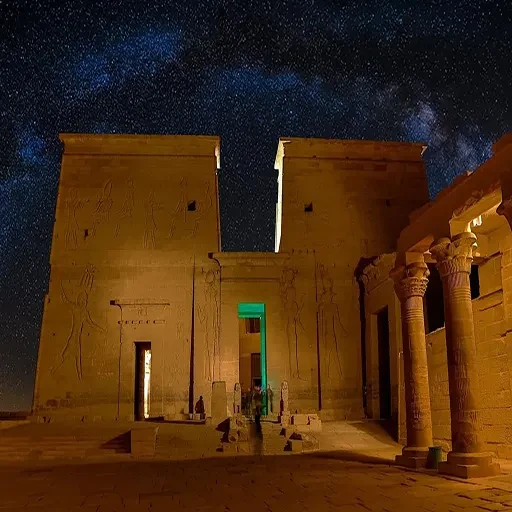
At the heart of the complex, the Isis Temple commands the visitor's attention with its towering pylons, columned halls, and sanctuaries adorned with carvings of exceptional delicacy and detail. Isis — goddess of magic, motherhood, and divine protection — was among the most universally venerated deities of the ancient world, and the temple built in her honor reflects that devotion in every carved surface and precisely proportioned architectural element.
The walls of the Isis Temple are covered in hieroglyphic inscriptions and relief carvings that constitute a comprehensive visual record of ancient Egyptian religious practice, mythology, and royal ceremony. These carvings invite visitors to read the walls as texts — to follow the narratives of gods and Pharaohs, of creation and cosmic order, of ritual and devotion — with a vividness and immediacy that bridges four thousand years with remarkable ease.
Philae Temple in Aswan is a cornerstone of Bastet Travel's expertly curated Aswan Tours, and experiencing it with a specialist Egyptologist guide transforms every carved image and architectural detail from beautiful object to profound story.
2. The Architectural Grandeur of Philae Temple in Aswan: Where Two Civilizations Meet
The Isis Temple Complex: Ptolemaic Artistry at Its Finest
The architectural achievement of Philae Temple in Aswan lies in the seamless synthesis of two great building traditions that might, in less accomplished hands, have produced contradiction rather than harmony. The Ptolemaic era architects and craftsmen who built and expanded the complex across several centuries succeeded instead in creating something that feels genuinely unified — a building that is simultaneously and completely both Egyptian and Hellenistic.
The following table illuminates the dual architectural heritage embedded in every dimension of Philae Temple in Aswan:
| Architectural Element | Egyptian Influence | Greco-Roman Influence |
|---|---|---|
| Temple Layout | Traditional Egyptian temple design with a central sanctuary progressing from public to sacred space | Incorporation of Hellenistic-style colonnades and porticos |
| Hieroglyphic Carvings | Intricate inscriptions depicting Egyptian deities and mythology in traditional register format | Inclusion of Greco-Roman-inspired motifs and decorative elements |
| Architectural Ornamentation | Egyptian-style lotus and papyrus columns — the sacred plants of Upper and Lower Egypt | Greco-Roman-inspired capitals and pediments crowning column shafts |
Hieroglyphics and Carvings: Reading the Walls of Philae Temple
One of the most rewarding dimensions of visiting Philae Temple in Aswan is the extraordinary quality and density of its hieroglyphic decoration. The walls, columns, pylons, and inner sanctuary surfaces of the Isis Temple are covered in inscriptions and relief carvings that document the full range of ancient Egyptian religious thought — from hymns to Isis and narratives of the Osiris myth to depictions of royal ritual and divine ceremony.
These carvings represent some of the finest surviving examples of Ptolemaic-era decorative art, executed with a precision and refinement that reflects the enormous resources and artistic ambition invested in this sacred site over several centuries of continuous construction and embellishment.
3. Philae Island: The Sacred Setting of Philae Temple in Aswan
The physical setting of Philae Temple in Aswan is inseparable from its emotional and spiritual impact. Philae Island in the Nile River is accessible only by boat — a journey across calm water that functions as a kind of decompression from the modern world and a preparation for the ancient one. As your boat approaches the island, the colonnade of the Isis Temple rises above the waterline with a dramatic elegance that has been captivating travelers for centuries.
On the island itself, the experience is one of extraordinary peace and natural beauty. Lush gardens, quiet stone pathways, and the constant presence of the Nile River create an atmosphere of contemplative serenity that makes Philae Temple in Aswan feel genuinely removed from ordinary time.
| Philae Island Highlights | Nearby Nubian Monuments |
|---|---|
| Philae Temple Complex | Kalabsha Temple |
| Tranquil gardens and stone walkways | Beit el-Wali Temple |
| Breathtaking Nile River panoramas | Kiosk of Trajan |
The Kiosk of Trajan — a graceful, open-sided structure of particular elegance — stands among the most photographed individual elements of the Philae Temple in Aswan complex, its proportions and decorative detail exemplifying the refined aesthetic confidence of Roman-era construction in Egypt.
4. The History of Philae Temple in Aswan: Ancient Origins and Modern Rescue
Construction and the Greco-Roman Era
Philae Temple in Aswan was established in the 4th century BC during the Ptolemaic period and continued to be expanded and embellished through the Roman era — a building history spanning several centuries that accounts for the richness and variety of its architectural and decorative program. The temple's construction reflects a period of intense cultural exchange between ancient Egypt and the broader Mediterranean world, during which Egyptian religious tradition and Hellenistic artistic sensibility produced some of antiquity's most sophisticated built environments.
The Ptolemaic rulers who commissioned and developed Philae Temple in Aswan understood the political and spiritual value of honoring Egyptian religious tradition in its own architectural language. Their patronage of the Isis Temple and associated structures was both a genuine act of devotion and a sophisticated statement of legitimacy — positioning themselves as rightful heirs to the Pharaonic tradition.
The Relocation: Saving Philae Temple for Future Generations
One of the most remarkable chapters in the history of Philae Temple in Aswan is its relocation in the 20th century. The construction of the Aswan High Dam created Lake Nasser, whose rising waters threatened to submerge the original Philae Island permanently. In a landmark international preservation effort coordinated by UNESCO, the entire temple complex was meticulously dismantled, moved stone by stone to the higher ground of Agilkia Island, and painstakingly reassembled — preserving Philae Temple in Aswan for future generations while honoring the integrity of its original design.
This extraordinary act of conservation — one of the largest archaeological rescue operations ever undertaken — is itself a testament to the universal recognition of Philae Temple in Aswan as a monument of irreplaceable civilizational value.
5. Philae Temple in Aswan as a UNESCO World Heritage Site
Philae Temple in Aswan holds UNESCO World Heritage Site status as part of the broader designation of Nubian Monuments from Abu Simbel to Aswan — a recognition that reflects the complex's outstanding universal value across three distinct cultural criteria:
| UNESCO Criteria | Significance |
|---|---|
| Cultural Criteria (i) | Philae Temple in Aswan is a masterpiece of human creative achievement, demonstrating the architectural and artistic genius of ancient Egypt at its most refined |
| Cultural Criteria (iii) | The temple complex is an exceptional repository of ancient Egyptian cultural tradition — its hieroglyphics, carvings, and religious significance representing an irreplaceable document of human civilization |
| Cultural Criteria (iv) | Philae Temple in Aswan is an outstanding example of a religious and architectural complex that illustrates a highly significant period in human history — the fusion of Pharaonic and Greco-Roman civilizations |
This UNESCO designation ensures that the conservation, presentation, and scholarly study of Philae Temple in Aswan remains a sustained international priority — and that its extraordinary heritage continues to be accessible to and appreciated by travelers from every part of the world.
6. Exploring the Nile River Attractions Around Philae Temple in Aswan
The cultural riches of Aswan extend well beyond Philae Temple in Aswan itself. The wider region offers a constellation of remarkable Nubian monuments and natural attractions that reward extended exploration and make Aswan one of the most compelling destinations in all of Egypt.
Nubian Monuments and Landmarks in the Aswan Region
| Nile River Attraction | Highlights |
|---|---|
| Philae Temple | Iconic temple complex dedicated to the goddess Isis, with extraordinary hieroglyphics, carvings, and island setting |
| Unfinished Obelisk | Massive, incomplete granite obelisk abandoned in its quarry that provides unique insights into ancient Egyptian stoneworking techniques and the scale of Pharaonic ambition |
| Aswan High Dam | An impressive feat of 20th-century engineering that controls the Nile's flow, generates hydroelectric power for Egypt, and created Lake Nasser |
| Aswan Botanical Garden | A serene, lush garden island showcasing the diverse flora of the Nubian region — a peaceful retreat from the intensity of the archaeological sites |
The Unfinished Obelisk, lying in its ancient granite quarry exactly as it was abandoned millennia ago when a flaw was discovered in the stone, is among the most thought-provoking monuments in Egypt — a moment of ancient human endeavor preserved in perfect stillness. The Aswan High Dam provides a striking modern counterpoint, demonstrating the Nile's continuing centrality to Egyptian civilization across the centuries.
A curated Nile Cruise sailing between Luxor and Aswan is the most immersive and rewarding way to connect these extraordinary sites — traveling the sacred river that gave life to every monument on its banks.
7. Practical Tips for Visiting Philae Temple in Aswan
Best Times to Visit
The optimal season for visiting Philae Temple in Aswan is October through April, when cooler, drier conditions make extended outdoor exploration genuinely comfortable. The peak visitor months of November through February bring the most favorable weather but also the largest crowds — arriving early in the morning is strongly recommended during this period to experience the temple complex in relative tranquility before tour groups arrive in numbers.
Essential Visitor Guidance
- Boat access is required — reaching Philae Island involves a short but atmospheric boat crossing from the mainland; allow additional time in your itinerary for this transit
- Sun protection is essential — the temple complex is largely open to the sky; high-SPF sunscreen, a wide-brimmed hat, and quality sunglasses are non-negotiable
- Wear comfortable footwear — the temple's stone pathways and internal stairs involve uneven surfaces that require supportive, well-soled shoes
- Carry water — hydration is particularly important during the warmer months when temperatures in Aswan can be significant
- Book a guided tour — the interpretive depth offered by a specialist Egyptologist guide transforms the experience of Philae Temple in Aswan from a visual encounter into a genuinely immersive historical journey
8. Experience Philae Temple in Aswan with Bastet Travel: Curated Expert Journeys
For the most richly rewarding experience of Philae Temple in Aswan and the wider wonders of the Aswan region, Bastet Travel offers expertly curated journeys that place this extraordinary monument at the center of a fully designed cultural itinerary. Our specialist local guides bring decades of Egyptological knowledge to every visit — sharing the temple's history, decoding its hieroglyphics, and illuminating the layers of ancient Egyptian and Greco-Roman civilization embedded in every carved surface and proportioned column.
Bastet Travel's Aswan Tours are crafted to deliver exclusive access, personalized service, and the kind of insider knowledge that transforms a visit to Philae Temple in Aswan into one of the defining experiences of your Egypt journey. Our broader Egypt tour packages seamlessly connect Aswan with Luxor Tours — including the Valley of the Kings and the Temple of Karnak — and with an unforgettable Nile Cruise sailing the sacred river between these two extraordinary cities.
Featured Egypt Tour Packages Including Philae Temple in Aswan
- 6-Day Affordable Egypt Tour: Cairo, Luxor, Aswan with Abu Simbel — from $1,300
- 7-Day Egypt Budget Tour and Nile Cruise Package — from $1,500
- 8-Day Egypt Tour: Cairo with 3 nights cruise by train — from $1,200
- 9-Day Egypt Itinerary: Cairo, Nile Cruise, and Alexandria by flight — from $1,750
- 9 Days in Egypt: Cairo, Nile Cruise, and Hurghada — from $1,750
- 10-Day Private Egypt Tour: Cairo, Nile Cruise, and Hurghada escape — from $1,870
Philae Temple in Aswan is, by any measure, one of the world's most beautiful and historically resonant ancient monuments — a place where the timeless power of the goddess Isis, the artistic ambition of the Ptolemaic era, and the natural grandeur of the Nile River converge in a setting of extraordinary serenity and beauty. It is, as its ancient reputation promises, the true Jewel of the Nile — and no journey through Egypt is complete without it. Let Bastet Travel guide you to this magnificent sanctuary with the expertise, care, and cultural depth that such a monument deserves. Inquire now via WhatsApp → http://wa.me/+201550191399
Guest comments